Introduction
Introduction
Objects of study in Vector Calc: Forces, Fields, Flows
What is Calc IV? Differential Geometry!
Link to original
Electricity and Magnetism
Electricity and Magnetism
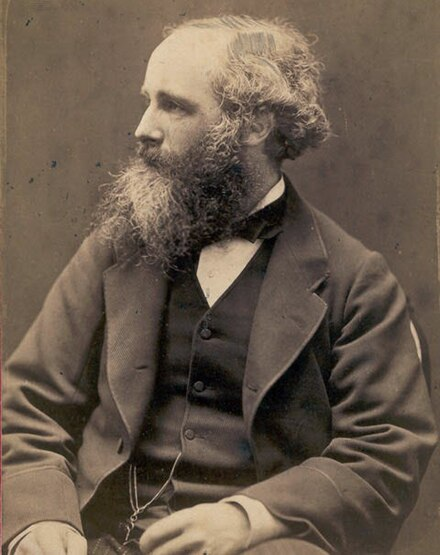
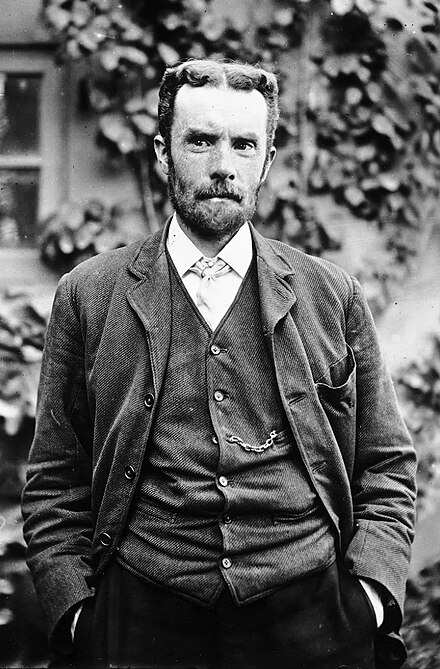
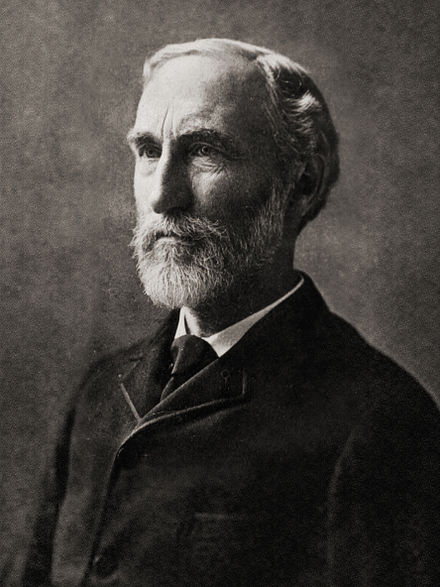
Vector calculus was invented by O. Heaviside and J. W. Gibbs (1901) to simplify the presentation of electromagnetic theory that was originally written using quaternion fields by James Clerk Maxwell (1873). Since then it has been used extensively for fluid dynamics as well.
Maxwell:
Heaviside:
(also Telegrapher Equations)
Gibbs:
(also statistical mechanics)
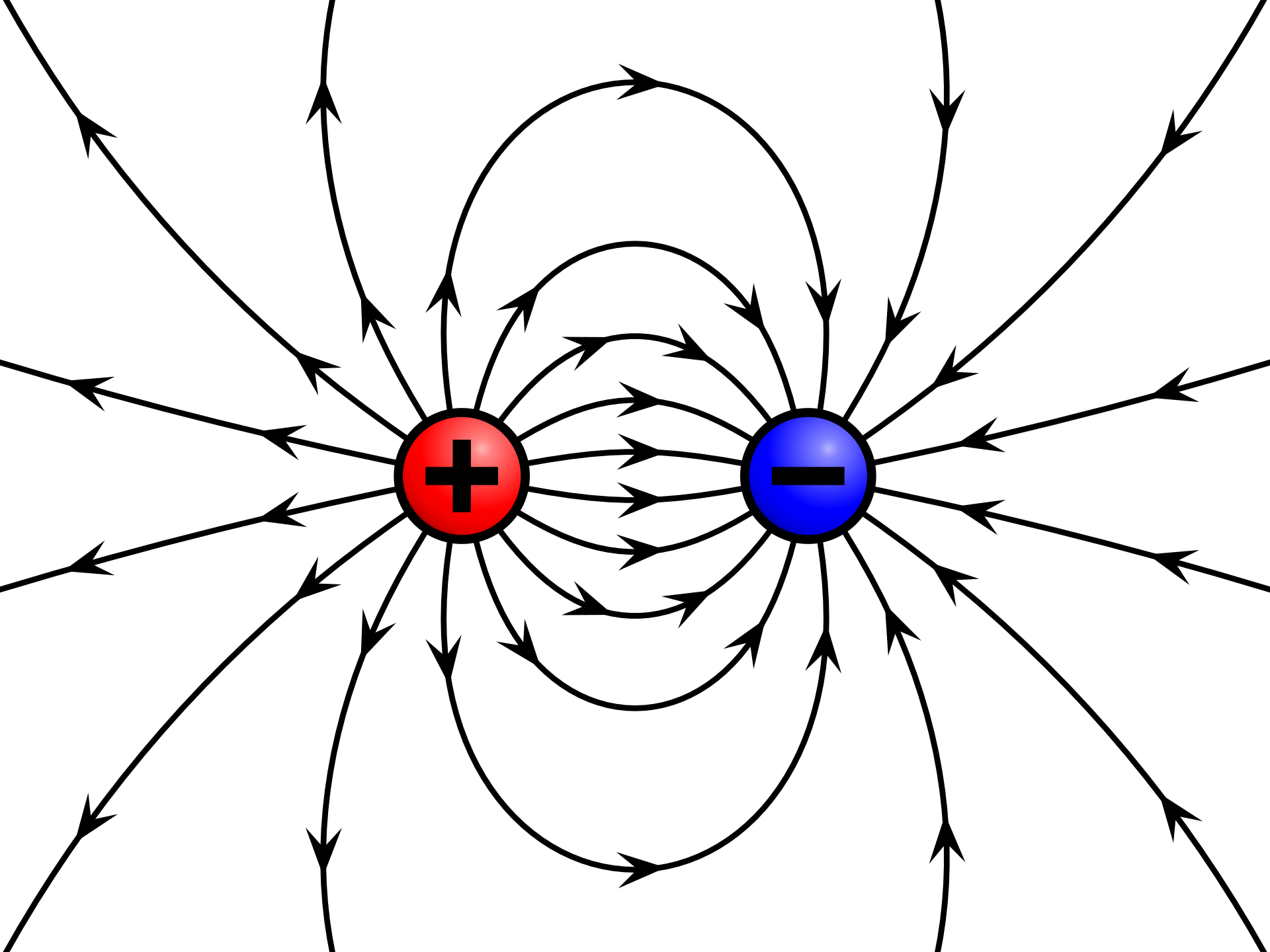
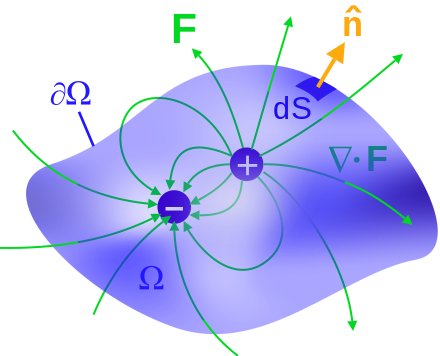
Charged particles:
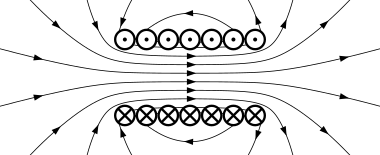
Current in solenoid:
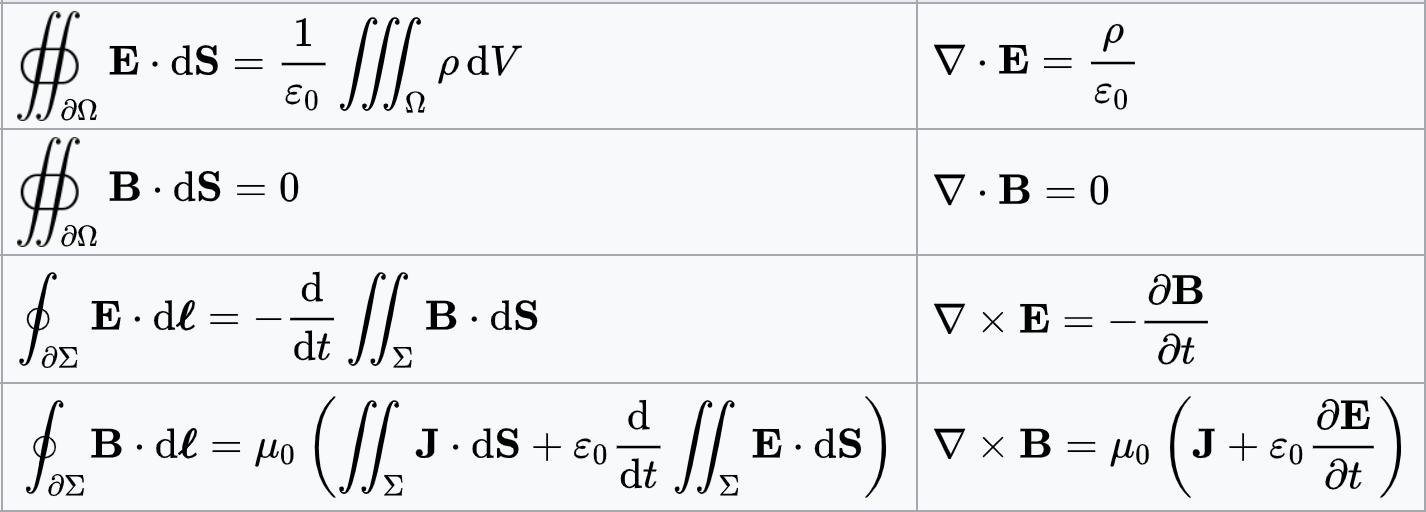
Maxwell Equations:
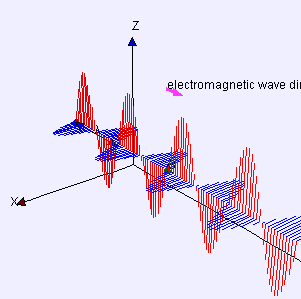
EM Waves:
Link to original
Fluid Dynamics
Fluid Dynamics
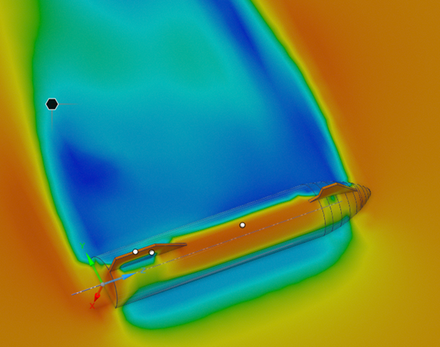
SpaceX Starship reentry:
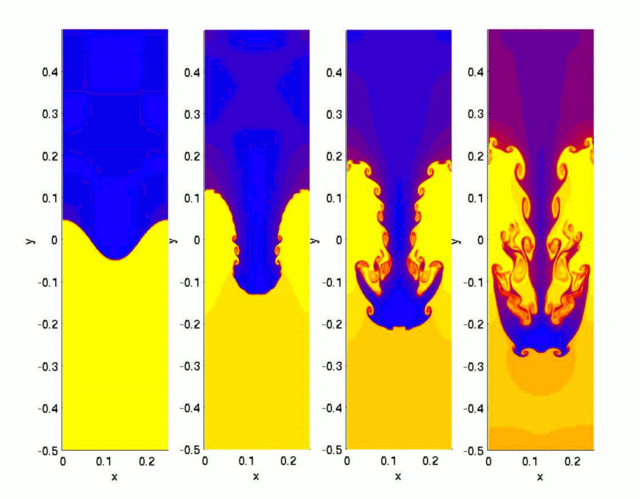
Rayleigh-Taylor instability:
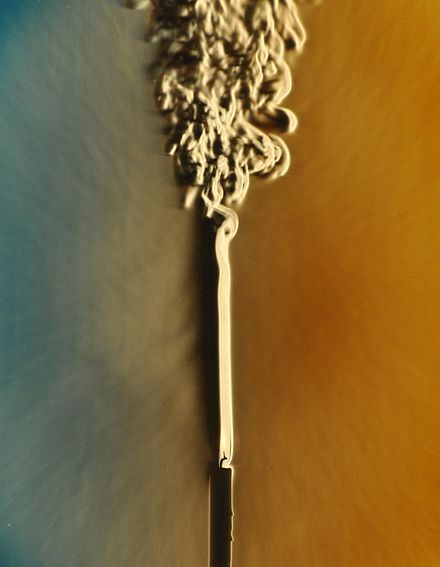
Laminar vs. turbulent flow:
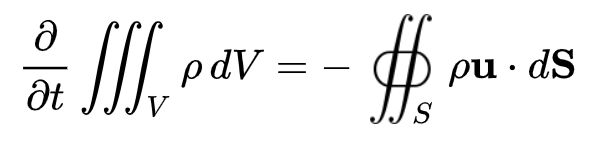
Conservation of Mass:
Conservation of Momentum:
Conservation of Energy:
Link to original


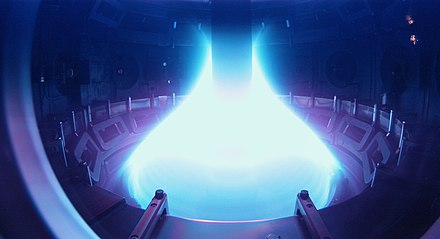
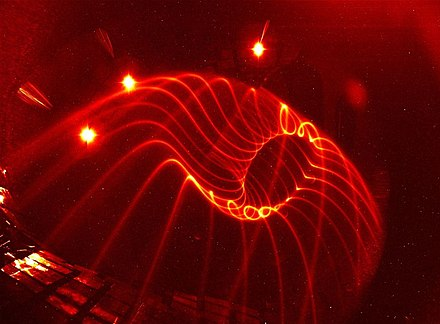
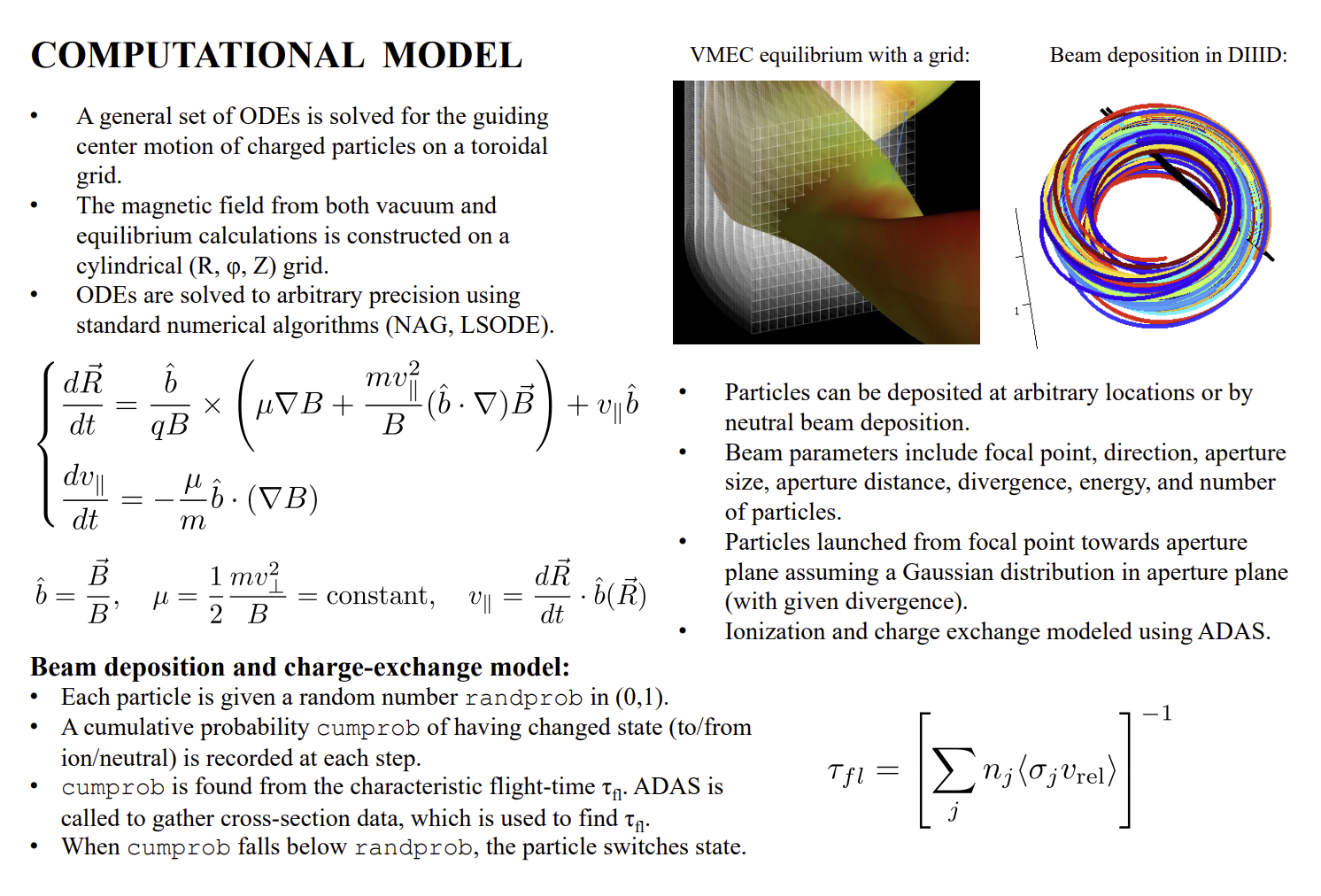
Plasma Physics: Fluids + EM Fields:
Plasma Physics - Fluids + EM Fields
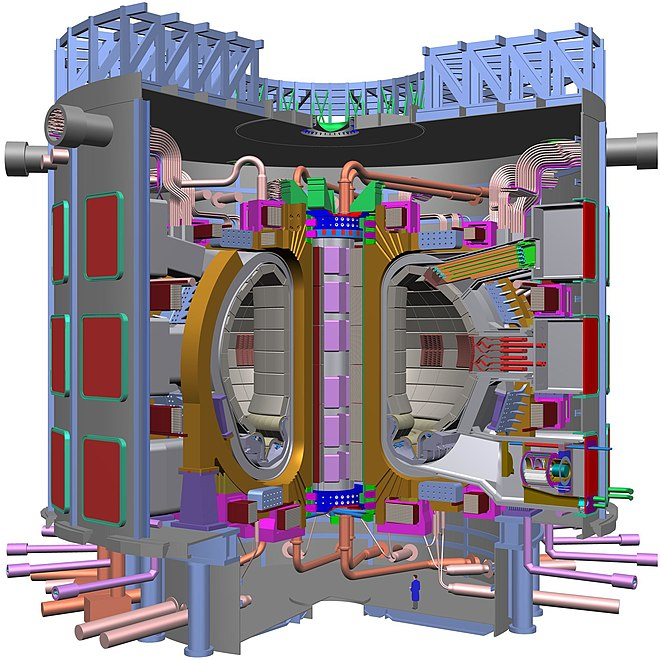
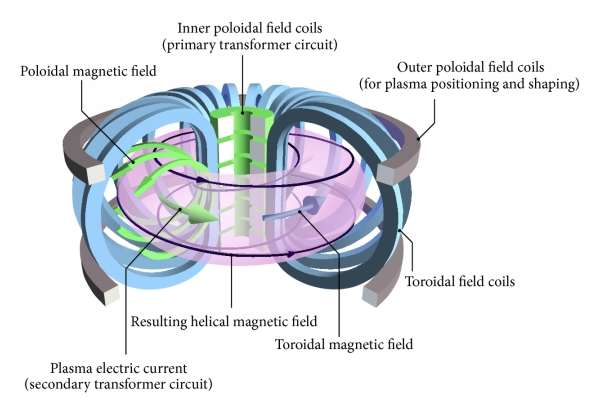
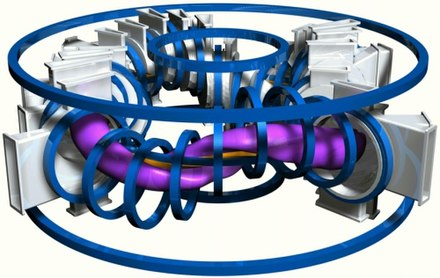
Tokomaks:
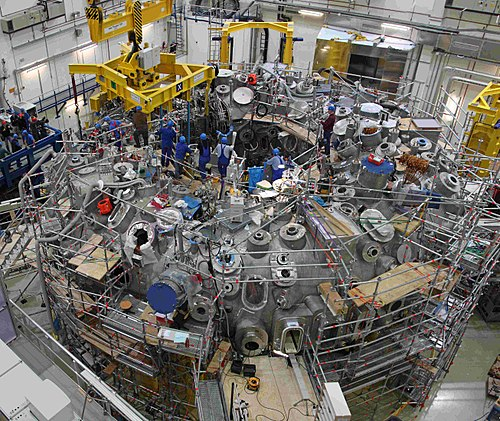
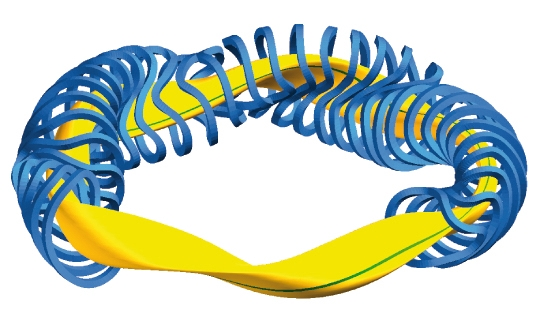
Stellerators:
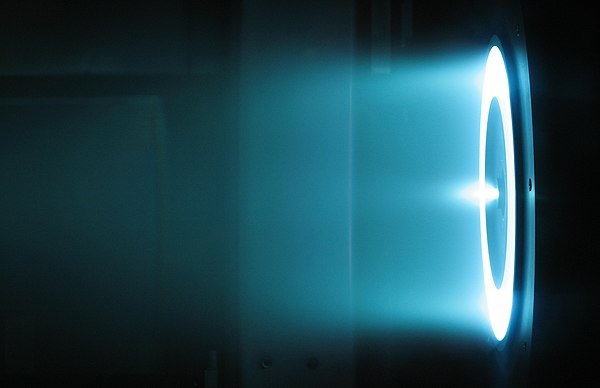
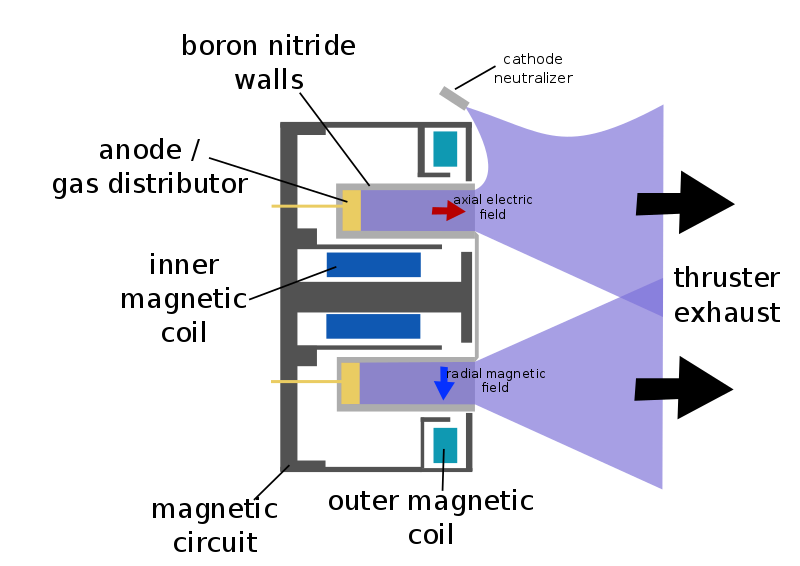
Hall Effect Thruster:
Link to original
Mathematics: Differential Geometry
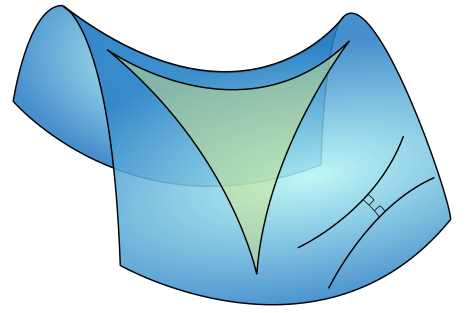
Mathematics - Differential Geometry
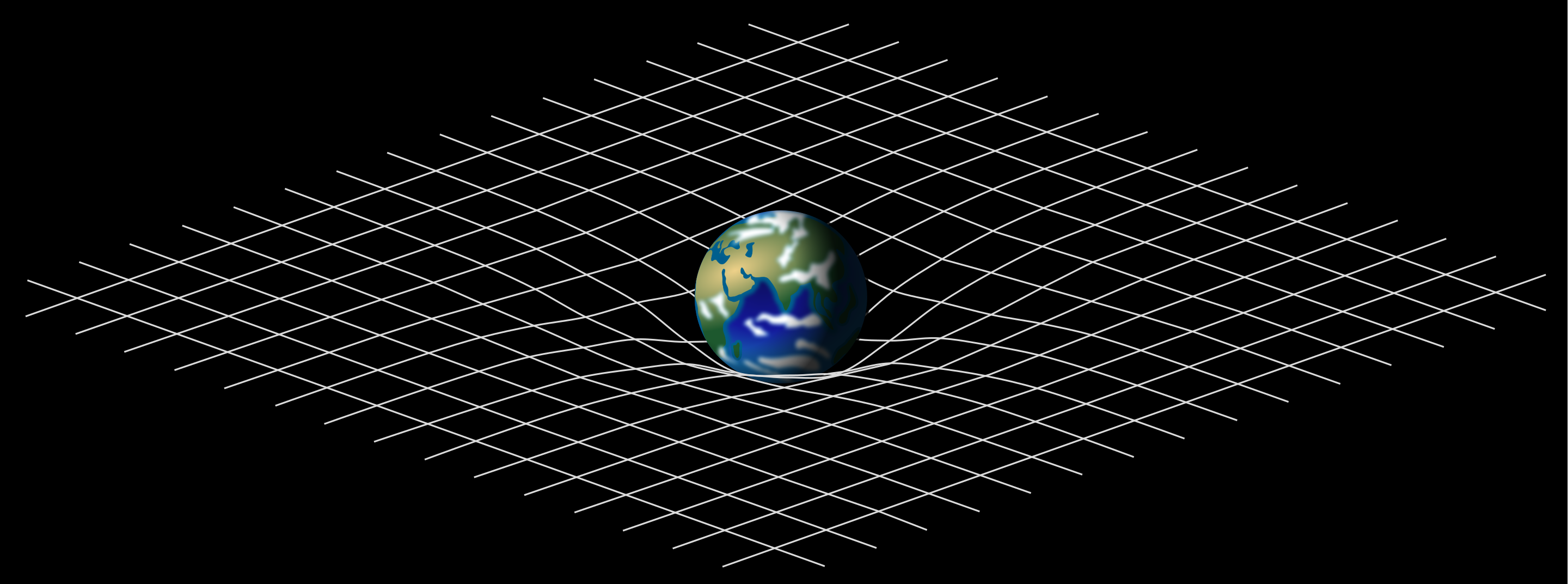
Gravity:
Link to original
Link: Gravitational lensing simulation
Optimization
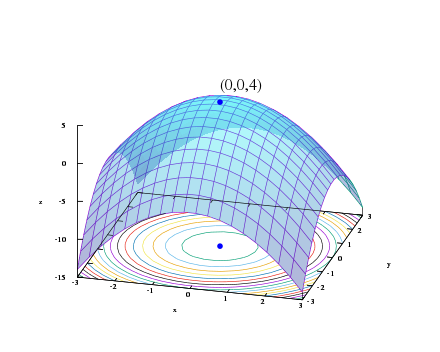
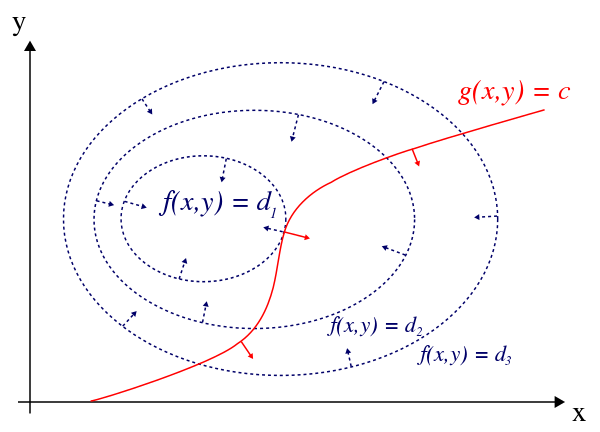
Optimization
Link to original
Parametric curves in 2D
Parametric curve
Parametric curve
A parametric curve or parameterized curve in the plane is a function from an interval to the plane, given with coordinate functions by .
The data of a parametric curve includes the parametrization, not just the set of points in the image.
Link to original
Example
Line in the plane from parametric equations
The parametric curve determines a line in .
Solve for in terms of :The slope is and the -intercept is .
Observe that by setting , the image is a vertical line in intersecting the -axis at .
Link to original
Warning!
Warning - same vertical line
The image of is the same vertical line!
Link to original
Warning!
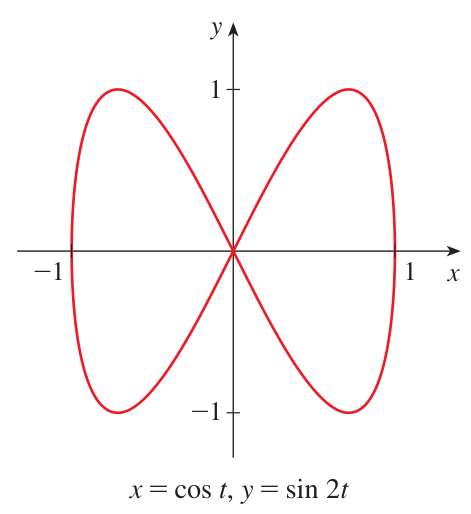
Warning - Lissajous figure self-intersection
This “Lissajous figure” shows that parametric curves can intersect themselves!
Link to original
Example
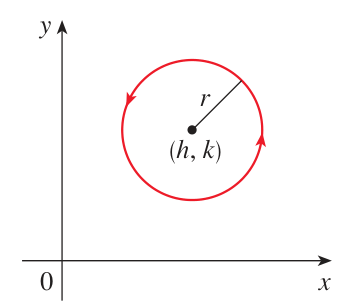
Parametrization of a circle
Circle, radius , center
Link to original
Example
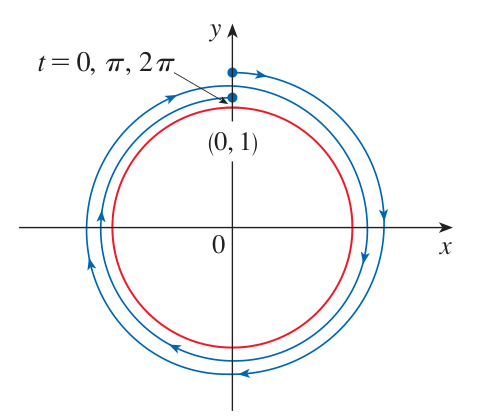
Sine and cosine of 2t as a parametric curve
Link to original
Example
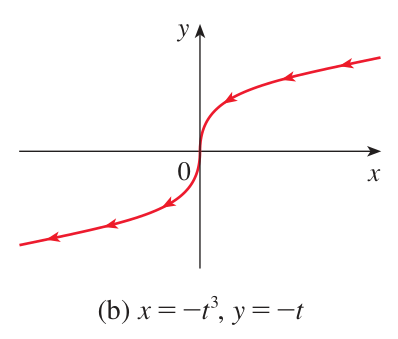
Cubic curve with x equal to y cubed
Link to original
The image curve satisfies .
Warning!
Warning - same image in the upper quadrant
In the upper quadrant, this curve has the same image:
Link to original
Check:
Exercise
01
Sketch the curve given by .
Link to original
Exercise
02
Describe the parametric curve as the graph of a function.
Link to original
Exercise
03
Consider the curve . Find the point on this curve with largest -value.
Link to original
Exercise
04
[Already done in class.]
Link to original
Points satisfying lie on an ellipse. Find a parametric curve that covers this ellipse.
Exercise
05
Find a parametric curve that is a line passing through with slope .
Link to original
Exercise
06
Eliminate to find an equation satisfied by alone for the following two parametric curves:
Link to original
a.
b.
Exercise
07
Describe the image of the curve parametrized by .
Link to original
Exercise
08
One particle has position , a second particle has position . Calculate the two points of intersection of the image curves determined by these formulas. Do the particles collide at those intersection points?
Link to original
Calculus with parametric curves in 2D
Traditional derivatives (unnatural)
Example
Slope of the tangent line to a parametric curve
Find a general formula for the slope of the tangent line to a parametric curve at the point determined by .
Solution: Consider as a function of . Remember the formula when so . (Think about implicit differentiation.) Then using the Chain Rule and this formula, we have:so the answer is .
Link to original
Warning!
Warning - traditional derivative is unnatural
This quantity is unnatural!
- From the point of view of graphs of functions, is natural and important. For a graph, space portrays the relation between input and output.
- From the point of view of parametric curves, it is unnatural. Here and should be treated on the same footing. Space portrays the output only.
Soon we consider more natural derivative operations in the parametric setting.
Link to original
Warning!
Warning - second derivative is not a ratio
Link to original
Example
Tangent line to a cycloid
A cycloid is given by the parametric curve with formula . Find the tangent line to this cycloid at .
Solution: Using the formula for , obtain:Then we have:
The image point when is . After solving for the -intercept we obtain the final equation:
Link to original
Exercise
01
Find the equation of the tangent line to the parametric curve at the point given by . Where is the tangent line horizontal?
Link to original
Distance traveled
Distance traveled
The distance traveled by a particle whose position is given parametrically by , as increases from to , is computed using this integral:
The formula is quickly derived from the usual one for arc length of the graph of a function:
by using the formula for together with the fact that .
It is better to see the formula as the summation of infinitesimal elements of distance , computing these with the Pythagorean Theorem:
so the formula is really just:
Link to original
Exercise
02
Find an integral formula for the length of the circumference of a general ellipse (centered at the origin). (Do not try to evaluate the integral!)
Link to original
Length function
Length function
Given a parametric curve , the formula for distance traveled can be used to define a length function . It is simply the distance traveled from to the time itself. To write this we need a new dummy variable:
Link to original
Speed
Speed
The speed is the rate of distance traveled per unit time: . From the Fundamental Theorem of Calculus, we have:
Link to original
Exercise
03
Suppose a particle traces the graph of a parabola with its position given parametrically by . How fast is the particle moving at time ? What is its acceleration at ?
Link to original
Curvature
Curvature
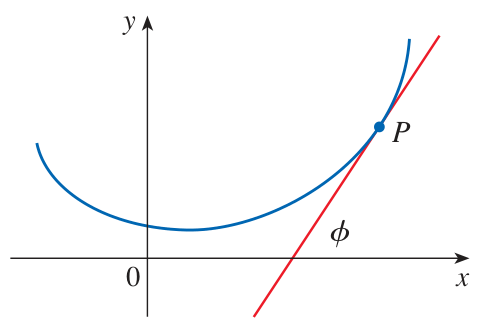
The curvature of a parametric curve in the plane may be defined as the rate of change of the angle of inclination per unit of arc length.
We can find a formula for this. Let the curve be given by . Clearly so . Using the quotient rule we have:
Then
Link to original
Exercise
04
Compute the curvature function for the circle given parametrically by . Is the answer what you should have expected?
Link to original
Polar coordinates
Introduction
The polar coordinate system uses parameters instead of to identify points in the plane. These coordinates are useful in problems having rotational symmetry. The two coordinate systems are related by these equations:
Link to original
Example
Circle with polar equation r = 2cos(theta)
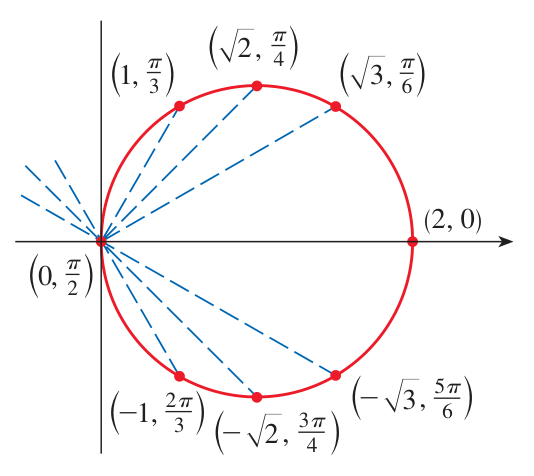
The points whose polar coordinates satisfy define a circle:
We can verify this by converting to Cartesian coordinates:so
Link to original
Exercise
01
Find the polar form of the equation of a vertical line passing through .
Link to original
Area under polar graphs
Area under polar graphs
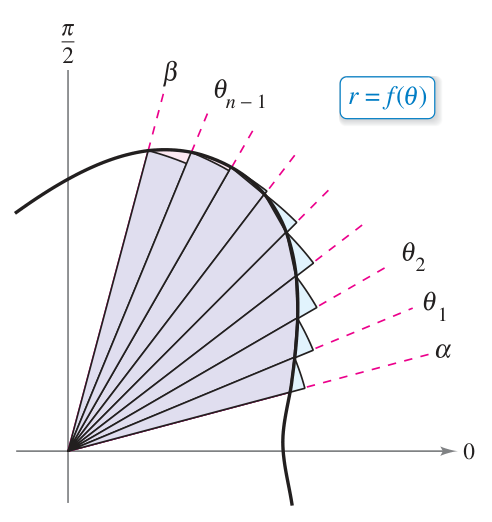
There is a formula to compute the area of the “sector sum” formed by a polar graph.
The area of a sector is , so the area of an infinitesimal sector is , and the formula just sums these.
Link to original
Example
Area of one loop of a four-leafed rose
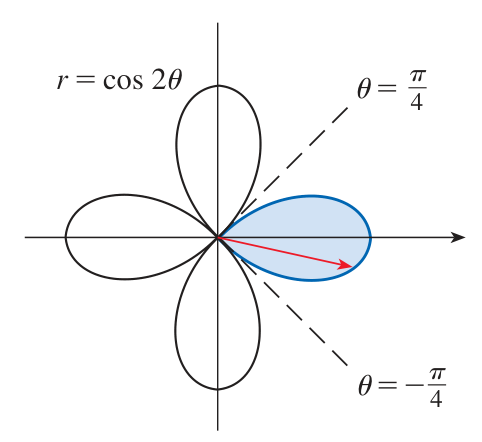
Find the area of one loop of the four-leafed rose .
Link to original
Solution: Plug into the formula, and use , obtaining:
Exercise
02
Find the area inside the region bounded by .
Link to original