Delta, Nerve, Čech complexes
Theory - Delta complexes
Delta complexes
The -complex structure is a generalization of simplicial complex structure. Instead of gluing simplices from the same by causing them to intersect at faces, one glues simplices from disjoint copies of using a formal quotient topology construction.
This technique allows many common spaces to be represented using fewer simplices. For example, a circle may be given as a -complex by identifying the two vertices of the standard -simplex. The torus may be given using just two -simplices by identifying each of the pairs of sides.
Why not simplicial?
These spaces cannot be formed as simplicial complexes by gluing the given simplices.
They are not literally simplicial complexes because the circle is round and the torus is not a subset of .
They are not homeomorphic to simplicial complexes (with the indicated decompositions) because the circle has a 1-loop while the torus has simplices which intersect in more than one face. (Both are impossible features for the homeomorphism type of simplicial complexes with the given decompositions.)
-Complex - Combinatorial
A combinatorial -complex is a sequence of simplex sets together with attaching maps , for , one for each facet of a simplex in .
Attaching maps join the faces of each simplex to simplices of lower dimension. This works geometrically when the attaching maps preserve adjacency of faces of faces. Preserving adjacency is equivalent to this combinatorial condition:
The adjacency condition may be illustrated with a 2-simplex:
Faces are numbered by removing a vertex in the order of vertices. So is edge 0 of the 2-simplex , and is edge 1, and so on. Thus is face 0 of the 1-simplex , and is face 1, and so on for the other edges.
Now interpret the adjacency condition:
Take as input the 2-simplex.
- With
- The condition says “vertex 0 of edge 1 equals vertex of edge 0.”
- These vertices are the point .
- With
- The condition says “vertex 0 of edge 2 equals vertex of edge 0.”
- These vertices are the point .
- With
- The condition says “vertex 1 of edge 2 equals vertex of edge 1.”
- These vertices are the point .
-Complex - Topological
A -complex is the topological space formed from a combinatorial -complex as the disjoint union of simplices enumerated by elements of , glued together according to the combinatorial attaching maps with canonically defined linear functions interpolating between glued vertices.
where , with is the inclusion of the face of the standard simplex , and is any point in that face.
Simplicial vs. complexes
How best to think about simplicial vs. - complexes?
- Simplicial complex:
- Collection of geometric simplices in the same background space .
- A sub-simplex brought to touch another sub-simplex only in one congruent face, where they are glued.
- -complex:
- Collection of abstract geometric simplices in distinct background spaces (disjoint union).
- Simplices in are attached to the lower-dimensional structure by gluing in the faces of new -simplices, preserving only the adjacency relation.
Underlying space
Given a complex (simplicial complex or -complex), the underlying topological space of is denoted .
Link to original-homology
Homology may be defined for -complexes using the same technique as for simplicial complexes.
When a simplicial complex is also a -complex, their homology groups are canonically isomorphic.
Theory - Nerve complex
Nerve complex
Nerve complex
Suppose is a collection of sets indexed by . The nerve complex is the collection of finite subsets such that is nonempty.
That is, the nerve is the complex of indices of finite collections of mutually overlapping subsets from .
Notes:
- The definition does not assume that the are subsets of a topological space. If they are, we do not assume that they are open.
- The nerve complex is a combinatorial complex: the elements are sets of indices, not the subsets themselves.
- Suppose is a subset in the nerve.
- Then all subsets of are also in the nerve.
- I.e. the nerve is closed under taking subsets.
- Therefore: the nerve is a combinatorial simplicial complex.
As a simplicial complex:
- vertices of the nerve correspond to individual sets
- -simplices in the nerve correspond to nonempty subsets having elements
Link to originalTheorem: Geometric realization
Every combinatorial simplicial complex with vertices can be realized as a geometric simplicial complex in .
In fact, every combinatorial simplicial complex with maximum simplex dimension equal to can be realized as a geometric simplicial complex in .
Theory - Čech complex
Čech complex
Link to originalČech complex
Suppose is a metric space. Suppose is a finite set of points in .
Fix . Define as the open balls:
The nerve of is called the Čech complex of .
Illustration
Illustration - Čech complexes of four points
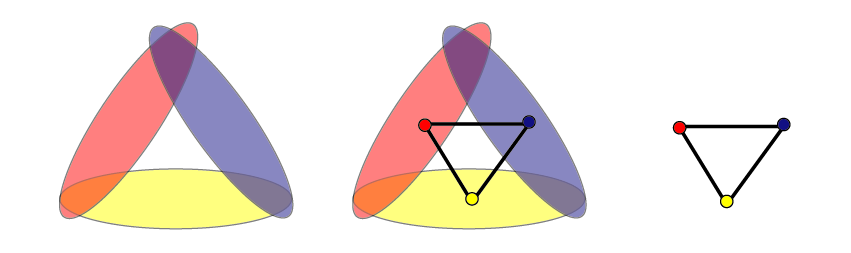
Let be four points in as in the figure.
The Čech complex created using is 1-dimensional – three of the points are linked.
The Čech complex created using is 2-dimensional – the three linked points now span a 2-simplex. The fourth point is also connected.
Link to original
Homotopy type
Theory - Homotopy type and homology
Homotopy type and homology
Homology can be used to distinguish topological spaces or to measure the topological complexity of a space. From the perspective of computational complexity theory, homology is very easy to compute.
Theorem: Homology depends functionally on
The isomorphism types of the homology groups of a simplicial complex depend only on , the underlying topological space.
More precisely, a homeomorphism of topological spaces induces an isomorphism of homology groups.
This theorem implies that any two homeomorphic spaces have isomorphic homology groups.
- %& For a topological space , we write for the homology groups of computed using any simplicial complex structure provided on .
- If does not have a simplicial complex structure, or -complex structure, one can still define singular homology for , and this homology still depends functionally only on the homeomorphism type.
- Singular homology is isomorphic to simplicial and -homology when the latter can be defined.
There is an equivalence relation between spaces that is much ‘coarser’ than homeomorphism, namely homotopy equivalence.
Homotopy equivalence
A homotopy equivalence between topological spaces and is a pair of continuous maps:
such that is homotopic to and is homotopic to .
We write when and are homotopy equivalent.
A homotopy from to would be a continuous map such that and . Analogously for a homotopy to .
A homeomorphism is actually the special case of a homotopy equivalence where the homotopies and are both the identity maps.
Theorem: Homology depends functionally on homotopy type
The isomorphism types of the homology groups of a topological space depend only on the homotopy type of the space.
More precisely, a homotopy equivalence of topological spaces induces an isomorphism of homology groups.
We will see a partial justification of this fact later, after discussing simplicial maps and chain maps.
Link to originalContractible spaces
A topological space is contractible if it is homotopy equivalent to a point.
Illustration
Contractibility of Rn
Link to originalContractibility of
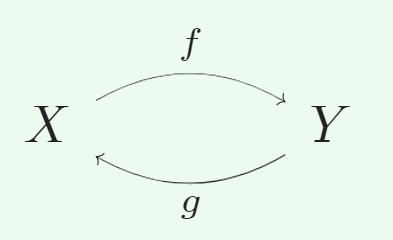
We show that is contractible.
Let be the origin. Consider the maps and :
Then is the constant map sending everything in to the origin.
Define . Then , which agrees with , while . Therefore is homotopic to .
Now consider that already. No additional homotopy is needed.
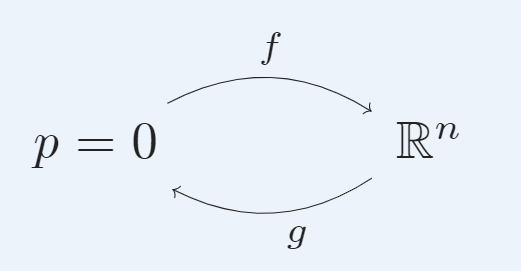
Illustration - convex sets and simplices are contractible
The same homotopy formula, namely , can be used to show that any ball in is contractible, and indeed any convex set in is contractible.
Link to original
- ! Therefore, any simplex is contractible.
Cylinder is homotopic to circle
Link to originalCylinder is homotopic to circle
A cylinder is given by . Consider the ‘collapse’ map given by projecting to the circle along straight lines, and the map given by inclusion:
The map is equal to the collapse map, and the map is the identity on .
Now construct a homotopy from the collapse map to :
Rank of homology
Theory - Betti numbers, Euler Characteristic
Betti numbers, Euler Characteristic
Rank of an abelian group
Every finitely generated abelian group is isomorphic to a group with this form:
- The summands give a free abelian part and contain all infinite-order generators.
- The summands give torsion and contain all finite-order generators.
The rank of is the number .
Betti numbers
The Betti numbers of a topological space are the ranks of the homology groups:
These Betti numbers may be combined into a single number, the Euler characteristic:
Link to originalEuler characteristic
The Euler characteristic of a topological space is the alternating sum of Betti numbers:
Illustration
Illustration - Euler characteristic of polyhedra and simplicial complexes
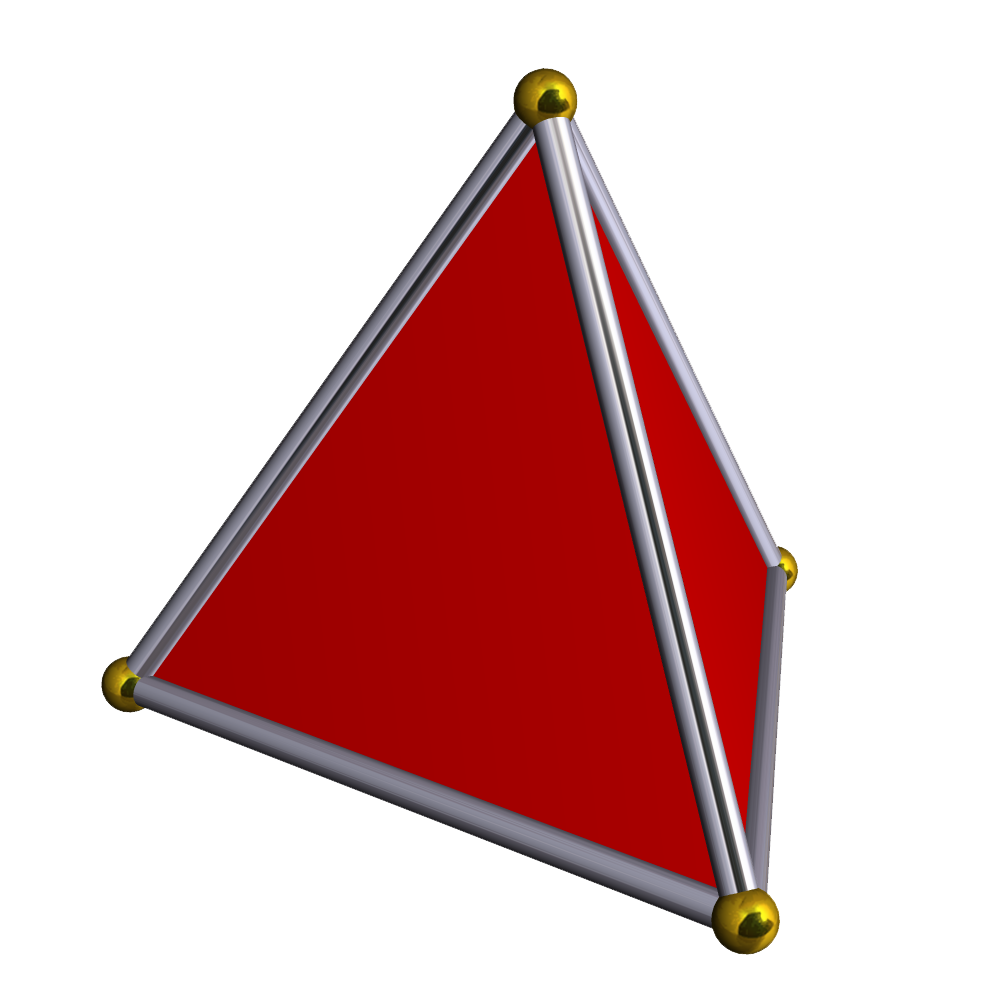
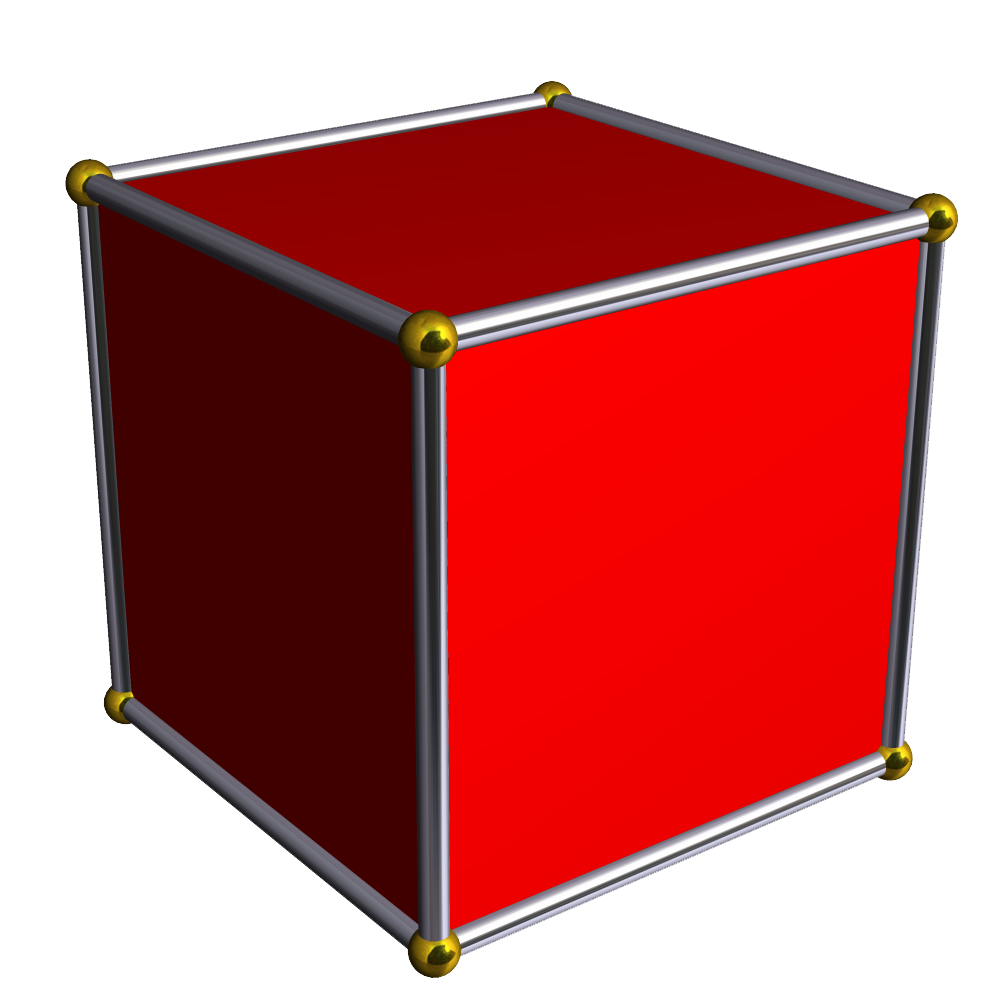
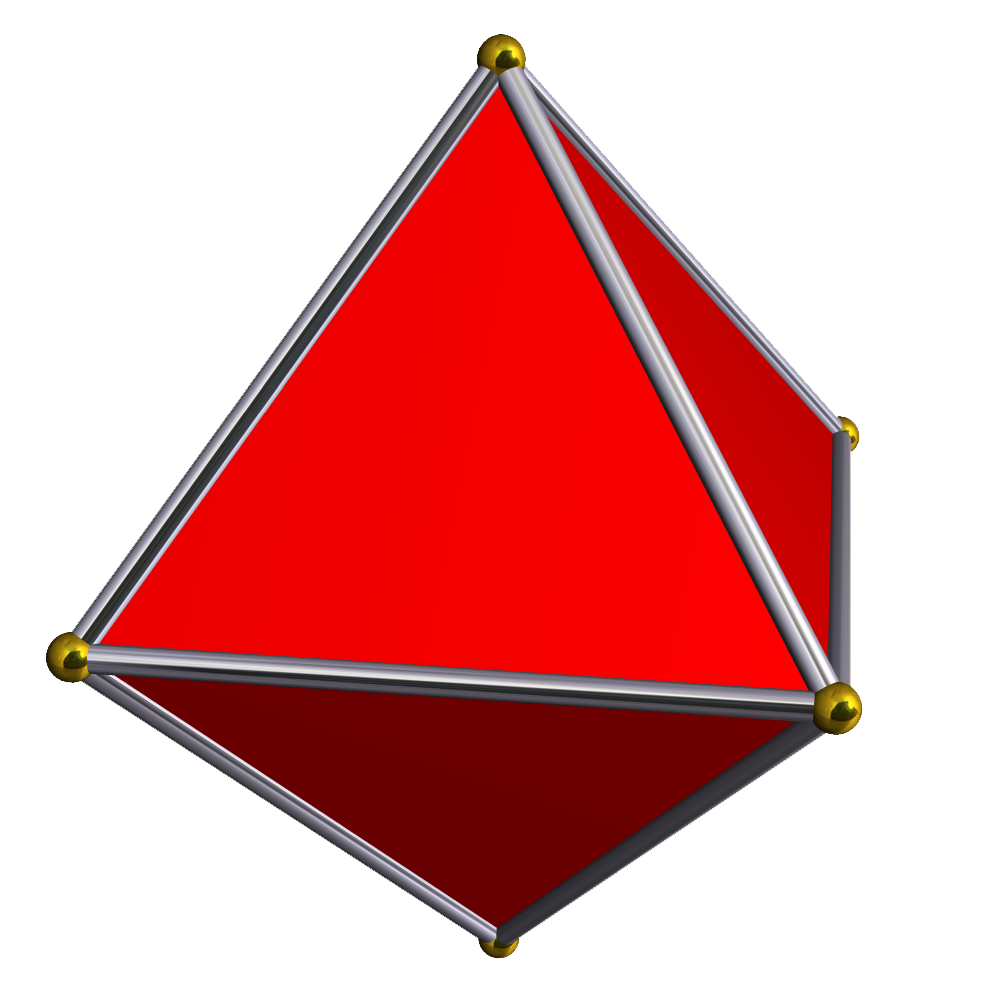
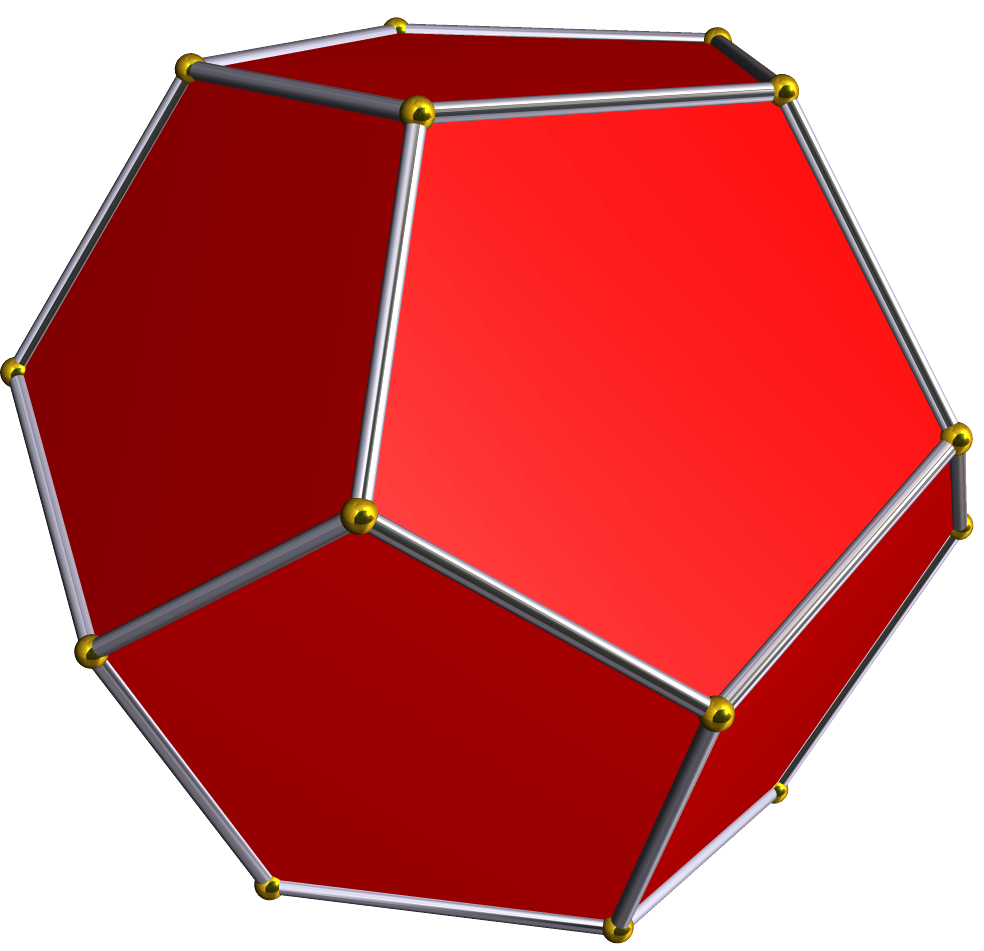
For convex polyhedra, Euler’s formula for the Euler characteristic is simply vertices minus edges plus faces:
For nonconvex polyhedra, this formula can give values other than the actual Euler characteristic defined using Betti numbers.
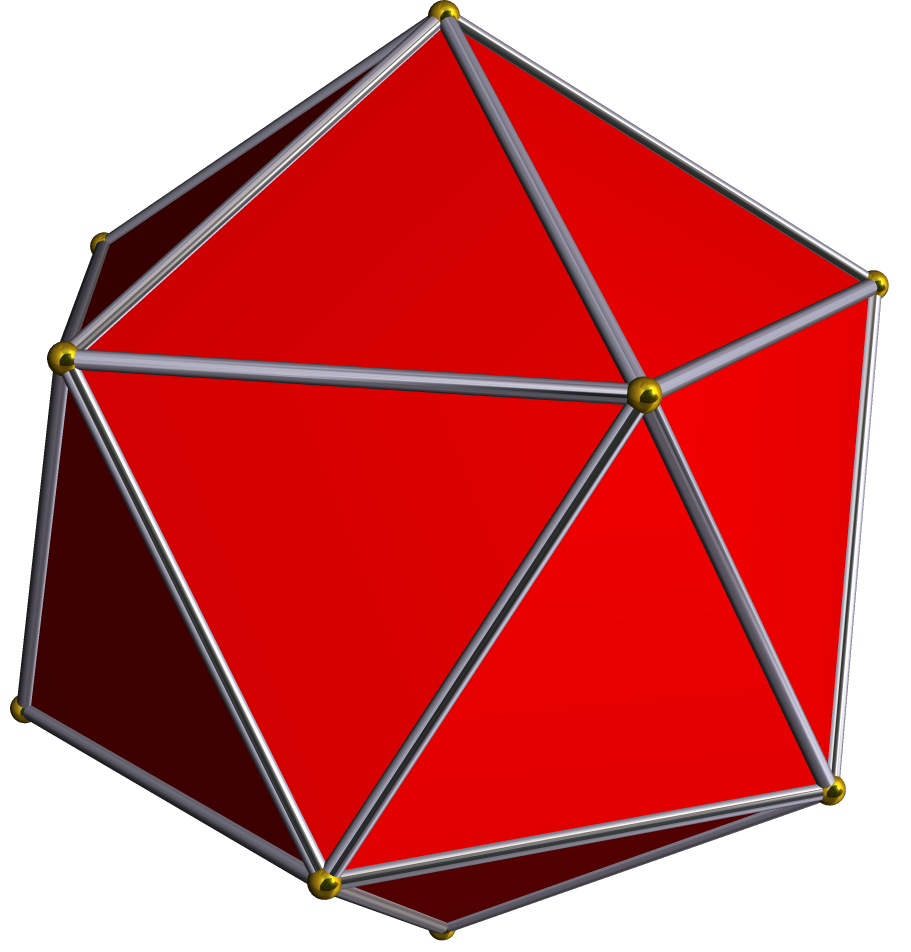
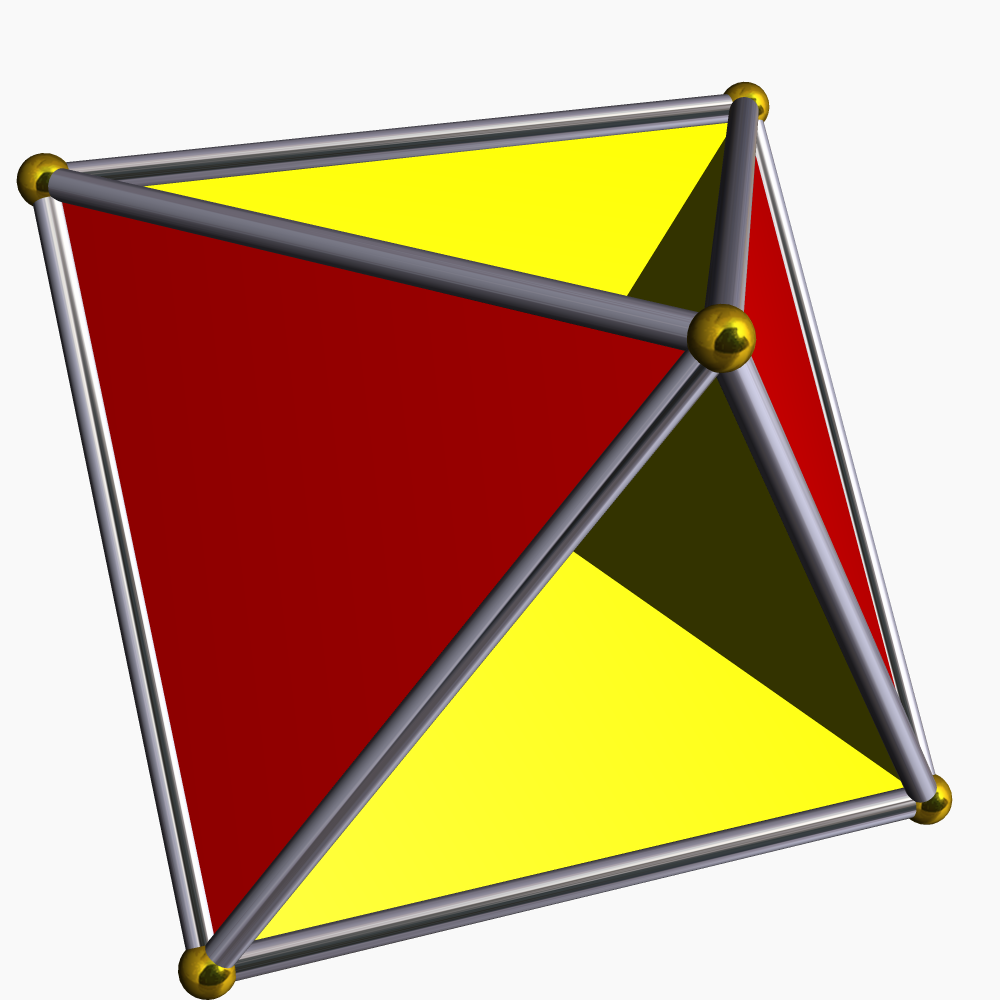
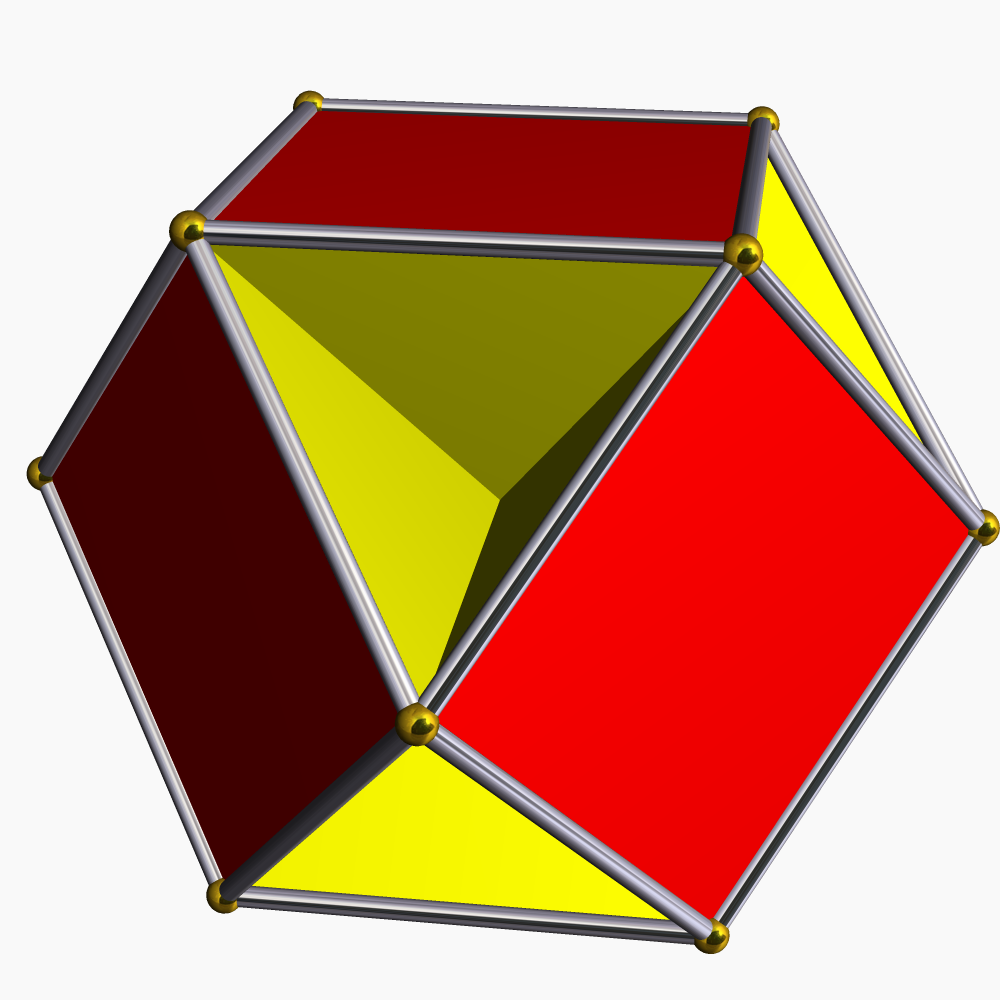
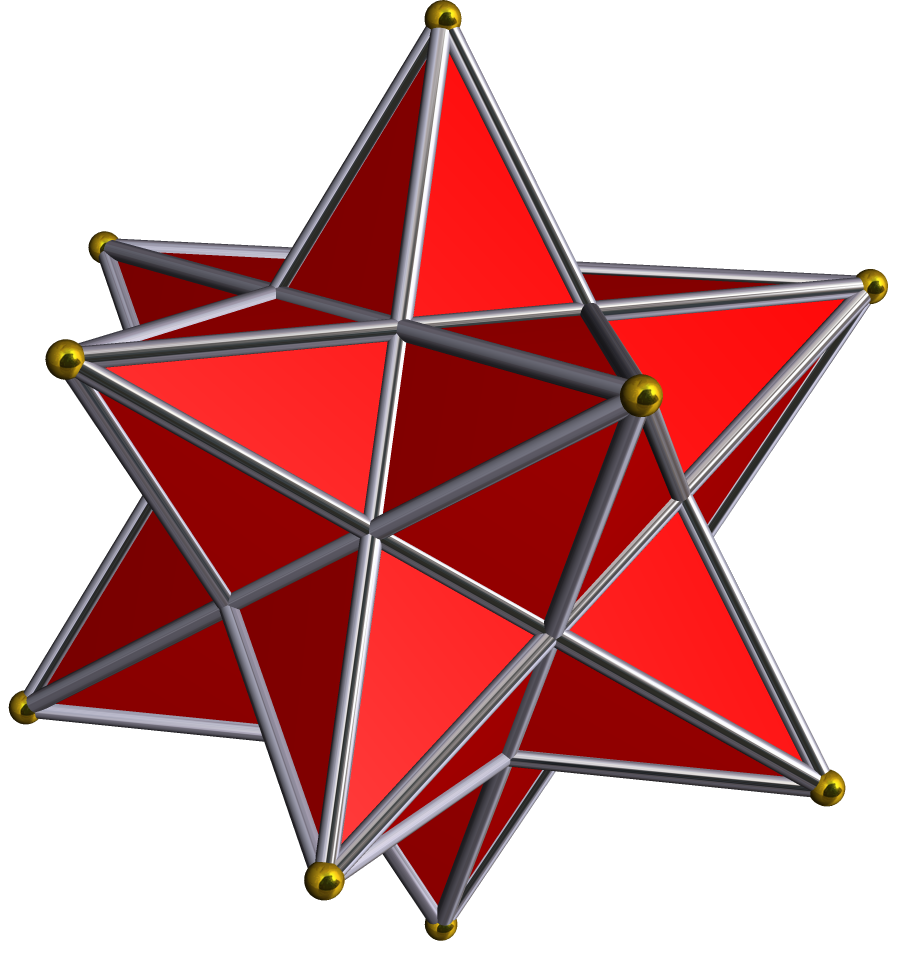
Name Figure Vertices Edges Faces Tetrahedron 4 6 4 2 Cube 8 12 6 2 Octahedron 6 12 8 2 Dodecahedron 20 30 12 2 Icosahedron 12 30 20 2 Tetrahemihexahedron 6 12 7 1 Cubohemioctahedron 12 24 10 -2 Small stellated dodecahedron 12 30 12 -6 For a simplicial complex, the Euler characteristic can always be computed using a formula analogous to the Euler formula: count the simplices of each dimension:
Here is the number of -simplices in the simplicial complex.
Theorem: Euler Euler
For a simplicial complex, the same Euler characteristic may be calculated using Betti numbers or using the counts of simplices.
We do not prove this here, although the proof is a straightforward homology calculation.
Link to original